

Najnowsze informacje o Intelliseq, naszych projektach, publikacjach i wydarzeniach.

News & Events
Partnerstwo Intelliseq i Hospital for Special Surgery
Hospital for Special Surgery (HSS), wiodący na świecie akademicki ośrodek medyczny skoncentrowany na zdrowiu układu mięśniowo-szkieletowego, nawiązał współpracę z Intelliseq, firmą zajmującą się analizą danych genomowych, specjalizującą się w analizie danych biologicznych na dużą skalę, w celu zapewnienia usług sekwencjonowania genomowego oraz analiz wspierających inicjatywę badawczą prowadzoną przez HSS.
Hospital for Special Surgery nawiązuje współpracę z Intelliseq w celu wsparcia badań ortopedycznych opartych na genomice
Intelliseq wykorzysta swoje kompetencje w zakresie sekwencjonowania całogenomowego oraz bioinformatyki, aby wesprzeć badaczy HSS w analizie, w jaki sposób czynniki genetyczne i kliniczne wpływają na proces powrotu do zdrowia pacjentów po operacjach kręgosłupa, ze szczególnym uwzględnieniem ryzyka powikłań zapalnych po zabiegu. Prace te obejmują ścisłą współpracę naukową pomiędzy badaczami HSS a zespołami genomiki i bioinformatyki Intelliseq.
Badania będą integrować dane genomowe z danymi klinicznymi i demograficznymi w celu wsparcia opracowania modeli predykcyjnych, które mogą w przyszłości stanowić podstawę narzędzi wspomagających podejmowanie decyzji klinicznych oraz spersonalizowane planowanie leczenia chirurgicznego. Projekt ten odzwierciedla dalsze zaangażowanie HSS w rozwój medycyny precyzyjnej w ortopedii poprzez wykorzystanie zaawansowanych technologii genomowych i obliczeniowych we współpracy z wyspecjalizowanymi partnerami badawczymi.
Więcej o HSS

News & Events
Partnerstwo Intelliseq & Manifold
Intelliseq nawiązał współpracę z Manifold, aby wprowadzić zautomatyzowaną interpretację danych genomowych do bezpiecznych, zarządzanych środowisk danych - umożliwiając skalowalne, gotowe na AI workflow w ochronie zdrowia i naukach life sciences.
Wyzwanie
Wraz z rosnącą ilością danych genomowych, głównym wyzwaniem przestaje być sekwencjonowanie - a staje się nim interpretacja.
Analiza trzeciorzędowa, obejmująca filtrowanie wariantów, anotację oraz kontekst kliniczny, pozostaje istotnym wąskim gardłem. Wiele organizacji nadal opiera się na rozproszonych narzędziach i manualnych procesach, co ogranicza skalowalność i spowalnia podejmowanie decyzji.
Rozwiązanie
Dzięki tej współpracy platforma iFlow oraz GeneSpect Reporters od Intelliseq umożliwiają automatyczną transformację surowych danych sekwencjonowania w ustrukturyzowane, klinicznie istotne wyniki.
W środowisku Manifold dane te mogą być łatwo łączone z danymi klinicznymi, obrazowymi i real-world data - co pozwala efektywnie wykorzystywać genomikę w badaniach i praktyce klinicznej.
Technologia
Podstawę rozwiązania stanowią:
iFlow - chmurowy silnik do automatycznej analizy trzeciorzędowej NGS
GeneSpect Reporters - moduły interpretacyjne obejmujące:
onkologię
choroby dziedziczne
farmakogenomikę (PGx)
poligeniczne wskaźniki ryzyka (PRS)
Dlaczego to ważne
Szybsza interpretacja - od surowych danych do gotowych wyników bez manualnych wąskich gardeł
Standaryzacja na dużą skalę - spójne i powtarzalne wyniki
Integracja danych - genomika połączona z danymi klinicznymi i real-world data
Gotowość na AI - dane ustrukturyzowane, gotowe do analiz i zastosowań AI
Perspektywa
„Większość surowych danych genomowych pozostaje trudna do interpretacji i wykorzystania na dużą skalę. Ta współpraca sprawia, że wyniki analiz mogą być bezpośrednio używane w szerszych workflow danych i AI.”
Klaudia Szklarczyk-Smolana, CEO Intelliseq
„Dane sekwencjonowania trafiają do środowiska i wychodzą z niego jako ustrukturyzowane, opisane i gotowe do wykorzystania przez systemy AI.”
Vinay Seth Mohta, CEO Manifold
O Manifold
Manifold to platforma AI dla sektora life sciences, umożliwiająca pracę na złożonych, multimodalnych danych w bezpiecznym i zarządzanym środowisku. Wspiera procesy od odkrywania celów terapeutycznych po medycynę precyzyjną, przy zachowaniu wysokich standardów zarządzania danymi.
News & Events
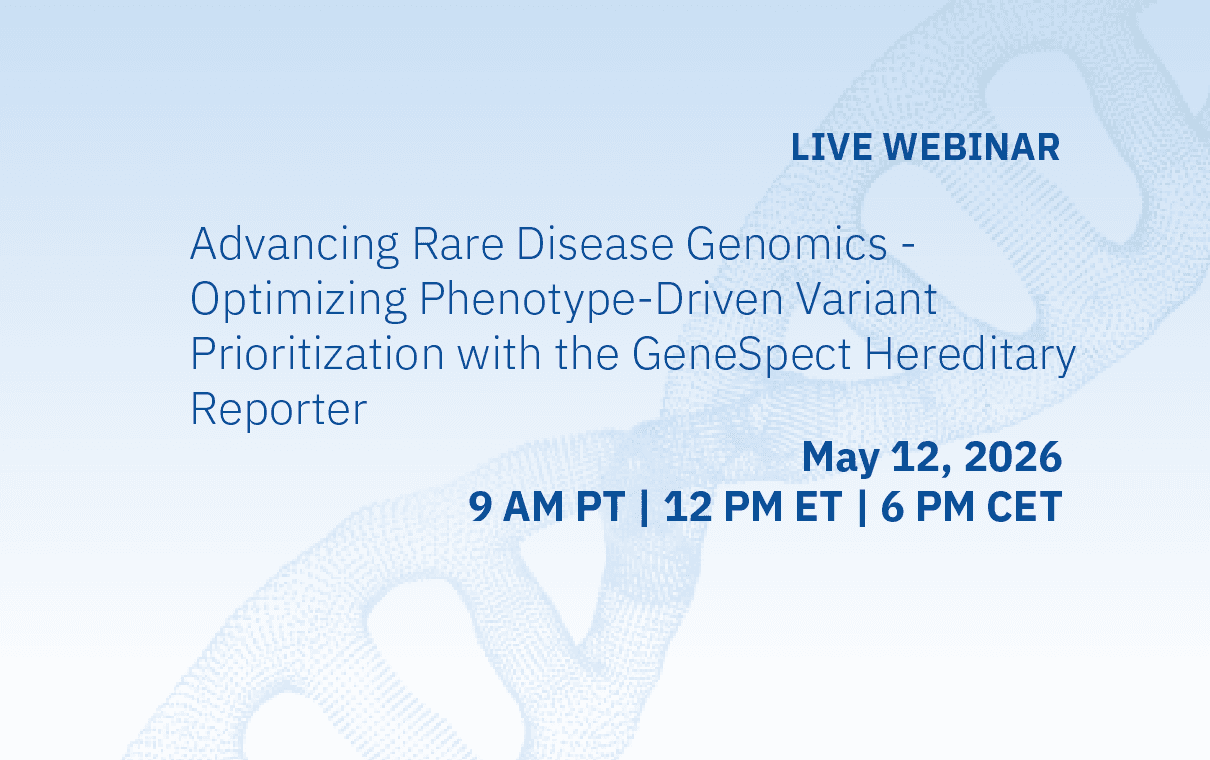
Webinar: Advancing Rare Disease Genomics - Optimizing Phenotype-Driven Variant Prioritization with the GeneSpect Hereditary Reporter
Przejdź od złożonych danych NGS do użytecznych klinicznie wniosków - szybciej i bardziej spójnie.
📅 12 maja 2026
⏰ 9:00 PT | 12:00 ET | 18:00 CET
Zarejestruj się
Sekwencjonowanie całego eksomu (WES) i całego genomu (WGS) stało się standardem w diagnostyce chorób rzadkich.
Jednak samo wykrycie wariantów to dopiero początek - ich efektywna priorytetyzacja nadal stanowi jedno z największych wyzwań.
Zespoły kliniczne wciąż polegają na manualnej analizie, łącząc dane genomowe z informacjami fenotypowymi, historią rodzinną i wzorcami dziedziczenia - co jest procesem czasochłonnym, złożonym i trudnym do skalowania.
Dlaczego warto wziąć udział
Podczas webinaru pokażemy, jak GeneSpect Hereditary Reporter pomaga przejść od surowych danych genomowych do pewnej interpretacji wariantów.
Pokażemy, jak połączenie automatycznej klasyfikacji ACMG/AMP z algorytmami ExploRare i VarMatch wpływa na:
priorytetyzację wariantów w oparciu o dane fenotypowe
integrację danych klinicznych i genomowych
generowanie ustrukturyzowanych raportów gotowych do podpisu
znaczące skrócenie czasu analizy.
Zarezerwuj miejsce
📅 12 maja 2026
⏰ 9:00 PT | 12:00 ET | 18:00 CET
Zarejestruj się
News & Events
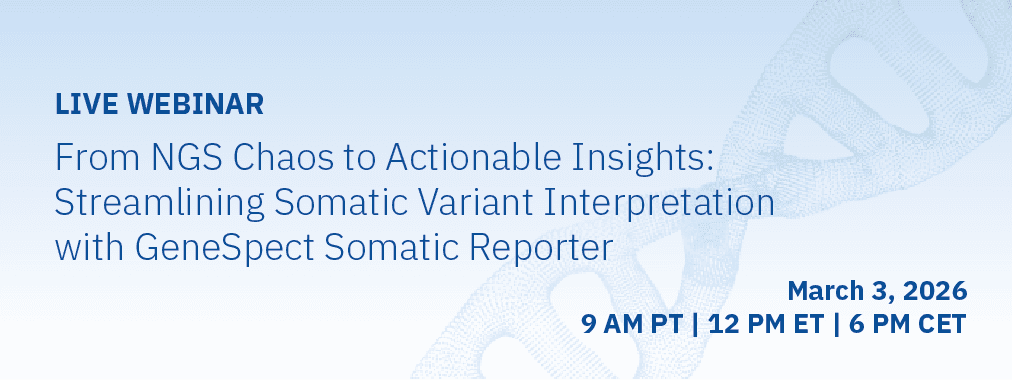
Webinar: From NGS Chaos to Actionable Insights
Sekwencjonowanie nowej generacji (NGS) zrewolucjonizowało diagnostykę onkologiczną, jednak interpretacja rosnącej liczby wariantów somatycznych nadal stanowi istotne wyzwanie dla laboratoriów klinicznych. Rozproszone źródła anotacji, zmieniające się wytyczne AMP/ACMG oraz manualne procesy mogą spowalniać zatwierdzanie raportów i wprowadzać zmienność w interpretacji klinicznej.
Zapraszamy na nasz nadchodzący webinar na żywo From NGS Chaos to Actionable Insights: Streamlining Somatic Variant Interpretation with GeneSpect Somatic Reporter, podczas którego pokażemy, w jaki sposób GeneSpect Somatic Reporter usprawnia interpretację wariantów somatycznych, przekształcając złożone dane NGS w przejrzyste, ustandaryzowane i klinicznie użyteczne wnioski. W trakcie sesji zaprezentujemy, jak automatyczna agregacja danych, klasyfikacja zgodna z wytycznymi AMP/ACMG oraz inteligentne raportowanie wspierają spójne i efektywne procesy kliniczne.
Czego się dowiesz:
Jak usprawnić interpretację wariantów somatycznych w nowotworach hematologicznych i guzach litych
W jaki sposób automatyczna klasyfikacja zgodna z AMP/ACMG wspiera spójną ocenę wariantów
Jak przekształcać złożone wyniki genetyczne w ustrukturyzowane raporty gotowe do zatwierdzenia klinicznego
Data: 2 marca 2026
Godzina: 9:00 PT | 12:00 ET | 18:00 CET

News & Events
ACMG Annual Clinical Genetics Meeting 2026
Intelliseq będzie wystawcą podczas konferencji ACMG Annual Clinical Genetics Meeting 2026, która odbędzie się w dniach 11–13 marca 2026 roku w Baltimore, USA.
Podczas wydarzenia nasz zespół zaprezentuje rozwiązania GeneSpect, zaprojektowane w celu wspierania interpretacji danych genomowych zarówno w środowisku klinicznym, jak i badawczym. Odwiedzający będą mieli okazję porozmawiać o aktualnych wyzwaniach związanych z analizą genomową, poznać praktyczne zastosowania oraz dowiedzieć się więcej o naszym podejściu do usprawniania procesów interpretacji.
Dodatkowo Intelliseq zaprezentuje poster naukowy, przedstawiający wnioski z naszych prac nad analizą danych genomowych.
📍 Stoisko #1011
📅 11–13 marca 2026
📍 Baltimore Convention Center
Jeśli chcieliby Państwo umówić spotkanie lub poprosić o demo podczas ACMG 2026, zachęcamy do wcześniejszego kontaktu z naszym zespołem.
News & Events
Intelliseq w LIMR – od identyfikacji wariantów do funkcjonalnych interpretacji
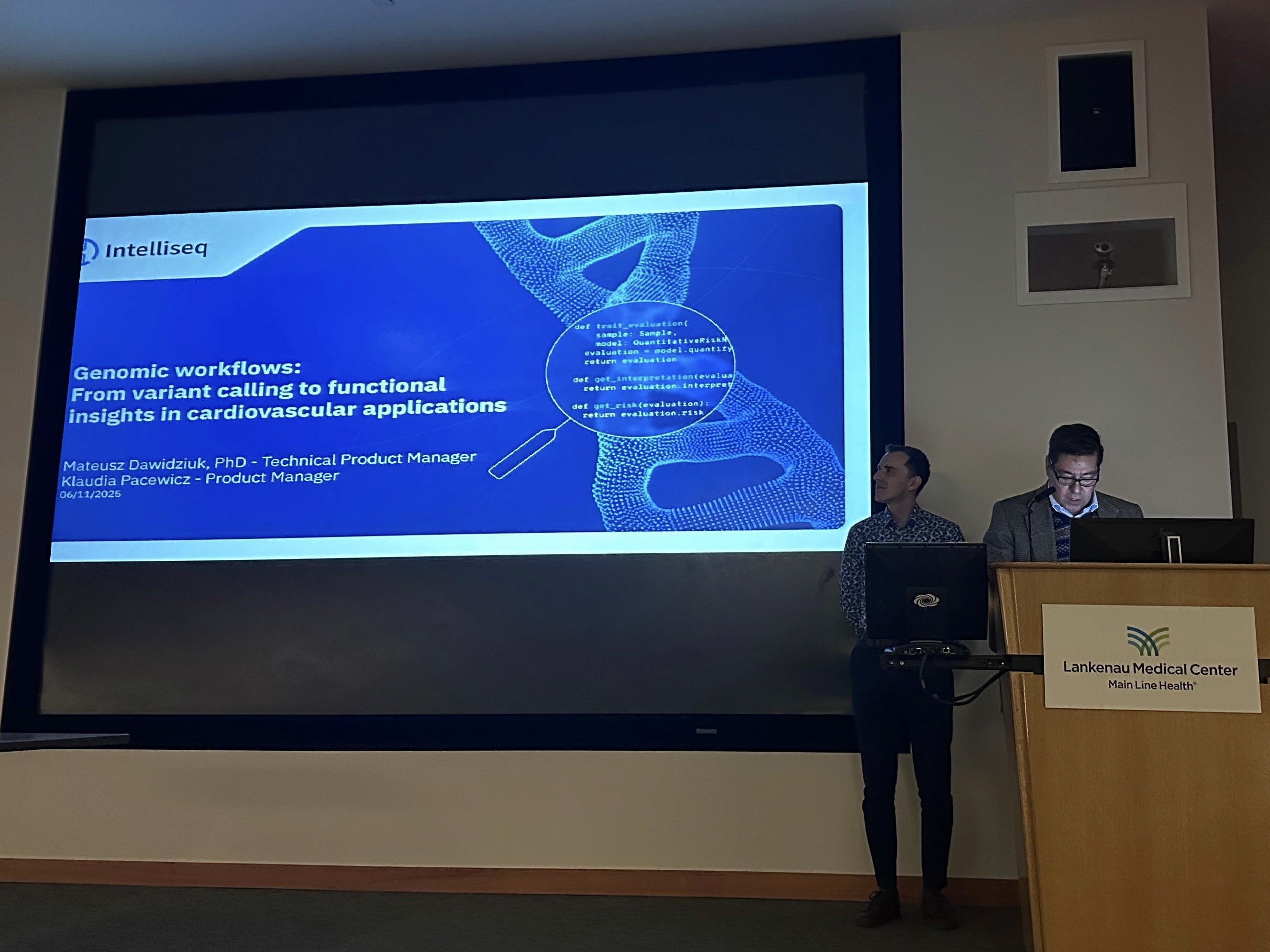
Mieliśmy przyjemność wygłosić prezentację pt. „Genomic workflows: From variant calling to functional insights in cardiovascular applications” w Lankenau Institute for Medical Research (LIMR), na zaproszenie Héctor Barajas-Martínez. Wystąpienie dotyczyło tego, w jaki sposób nowoczesne pipeline’y analizy genomowej mogą wspierać genetykę chorób sercowo-naczyniowych poprzez integrację wielkoskalowej interpretacji wariantów DNA z priorytetyzacją opartą na fenotypie oraz standaryzowanym raportowaniem.
W LIMR działania w obszarze klinicznej genetyki kardiologicznej koncentrują się na dostarczaniu pacjentom terminowych i wiarygodnych informacji genetycznych, wspierających procesy diagnostyczne, stratyfikację ryzyka oraz decyzje terapeutyczne. Choroby sercowo-naczyniowe, zwłaszcza kanałopatie i dziedziczne arytmie, często wymagają złożonej interpretacji wariantów genetycznych, gdzie niepewność może opóźniać działania kliniczne.
Bazując na silnych fundamentach LIMR w badaniach kardiologicznych, prezentacja łączyła genomikę obliczeniową z funkcjonalną biologią serca. Héctor Barajas-Martínez prowadzi badania z zakresu genomiki translacyjnej, ukierunkowane na identyfikację markerów genetycznych wspierających diagnostykę i leczenie chorób sercowo-naczyniowych. Jego prace wykorzystują metody komórkowe, molekularne i elektrofizjologiczne do charakteryzowania funkcji kanałów jonowych oraz korelowania zachowania kanałów typu dzikiego i zmutowanych z fenotypami arytmii oraz toksycznością leków. Badania te w istotny sposób przyczyniają się do odróżniania wariantów patogennych od łagodnych, wspierając proces diagnostyczny – szczególnie u pacjentów, u których molekularne podłoże choroby nie jest od razu oczywiste.
Podczas prezentacji zwróciliśmy uwagę na kluczowe wyzwania współczesnej genomiki klinicznej:
duże obciążenie wynikające z analizy obszernych zbiorów danych sekwencyjnych przy ograniczonych zasobach kadrowych,
trudności w interpretacji wariantów o niepewnym znaczeniu klinicznym (VUS),
heterogeniczność fenotypową i niepełną penetrację, które komplikują ocenę wariantów.
W tym kontekście nasze narzędzia wnoszą istotną wartość, przyspieszając priorytetyzację wariantów i ograniczając nakład pracy związany z manualną klasyfikacją.
Podkreśliliśmy, w jaki sposób rozwiązania takie jak ExploRare i VarMatch umożliwiają opartą na danych i zintegrowaną z fenotypem priorytetyzację wariantów oraz genów, pomagając identyfikować te o największym znaczeniu klinicznym. Dodatkowo automatyczne generowanie raportów wspiera klinicystów poprzez standaryzację dokumentacji i usprawnienie procesu diagnostycznego.
Nasza wymiana doświadczeń w Lankenau Institute for Medical Research podkreśliła wspólny cel: umożliwienie szybszej, bardziej przejrzystej i użytecznej diagnostyki genetycznej dla pacjentów kardiologicznych. Z niecierpliwością czekamy na dalsze możliwości współpracy, które pozwolą jeszcze lepiej integrować interpretację obliczeniową z praktyką kliniczną.